CWL Visual Workflow Editor
Low-code visual IDE for building, editing, and deploying CWL scientific pipelines — entirely web-based, no YAML required. Built as MSc thesis at University of Turin.
// Problem
Bioinformaticians and scientific researchers build reproducible computational pipelines using Common Workflow Language (CWL). But authoring CWL requires hand-writing verbose YAML — a painful, error-prone process that blocks non-engineers from contributing to pipeline design and makes structural errors invisible until runtime.
// Solution
A visual node-graph editor where each CWL step, tool, and connection is a draggable node on a canvas. The editor maintains full bidirectional fidelity: import any valid CWL YAML into the visual graph, edit visually, and export back to semantically equivalent YAML. Real-time type checking prevents structural errors before execution.
// Parser Pipeline
// Key Engineering Decisions
// User Study
Conducted a formal Technology Acceptance Model (TAM) evaluation with domain experts — bioinformaticians and researchers who use CWL daily. The Behavioral Intention to Use score (5.02/7) indicates strong acceptance and willingness to adopt the tool in real workflows. Perceived Usefulness and Ease of Use both rated above the TAM acceptance threshold.
// Deployment Targets
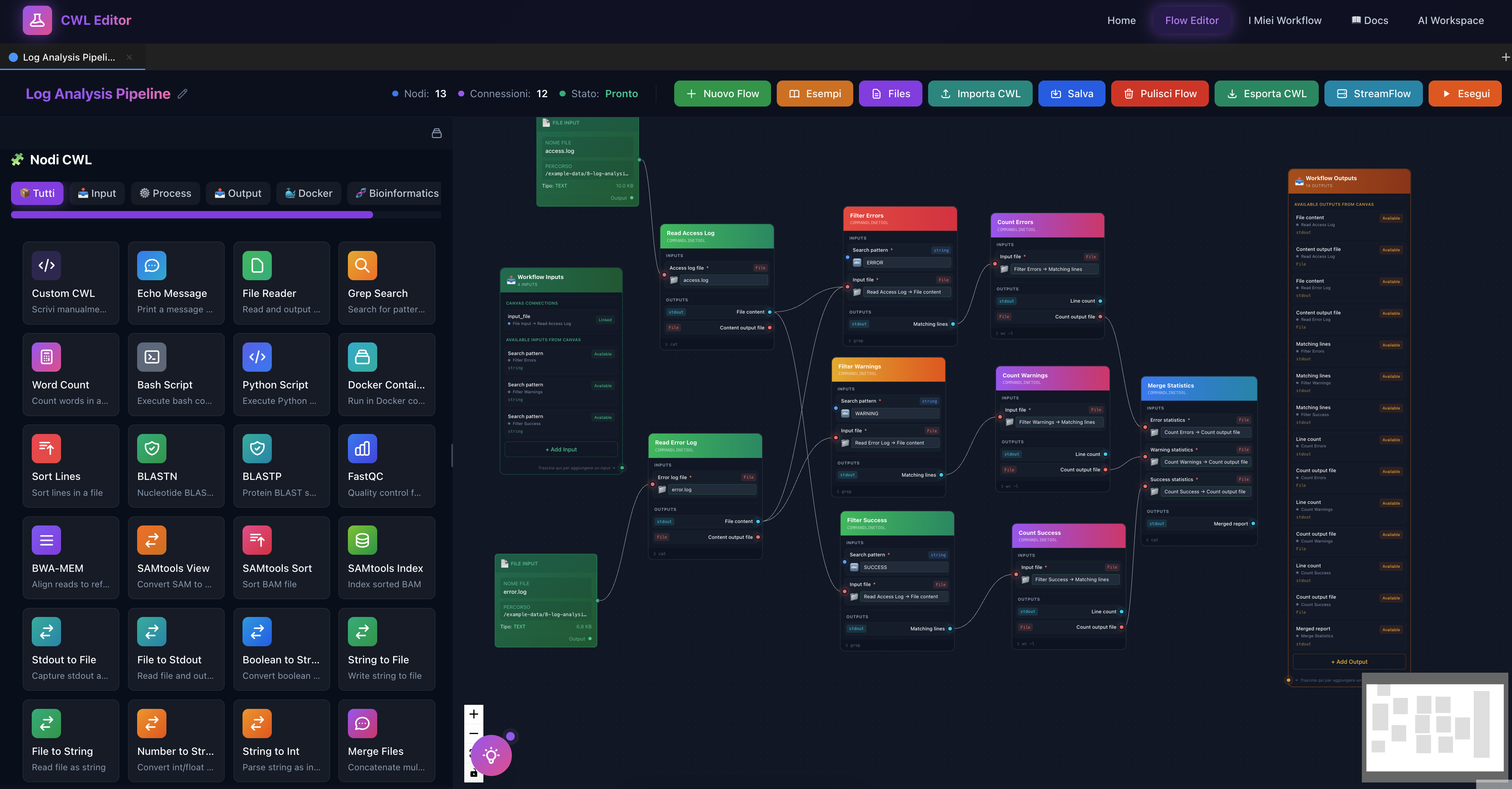
[01/03] — System overview: YAML import, visual editing, and export pipeline